Brasal (Coca-Cola) · 2023
Partner registration platform
Becoming a Coca-Cola retailer took paperwork, spreadsheets and weeks of waiting. I designed the platform that moved it online, with real-time status for store owners and sales reps.
- Role
- UX/UI Designer, end to end
- Team
- Product owner Leticia Miranda, the Brasal development team, and the market intelligence and finance teams
- Platform
- Web, tablet and mobile
- Year
- 2023
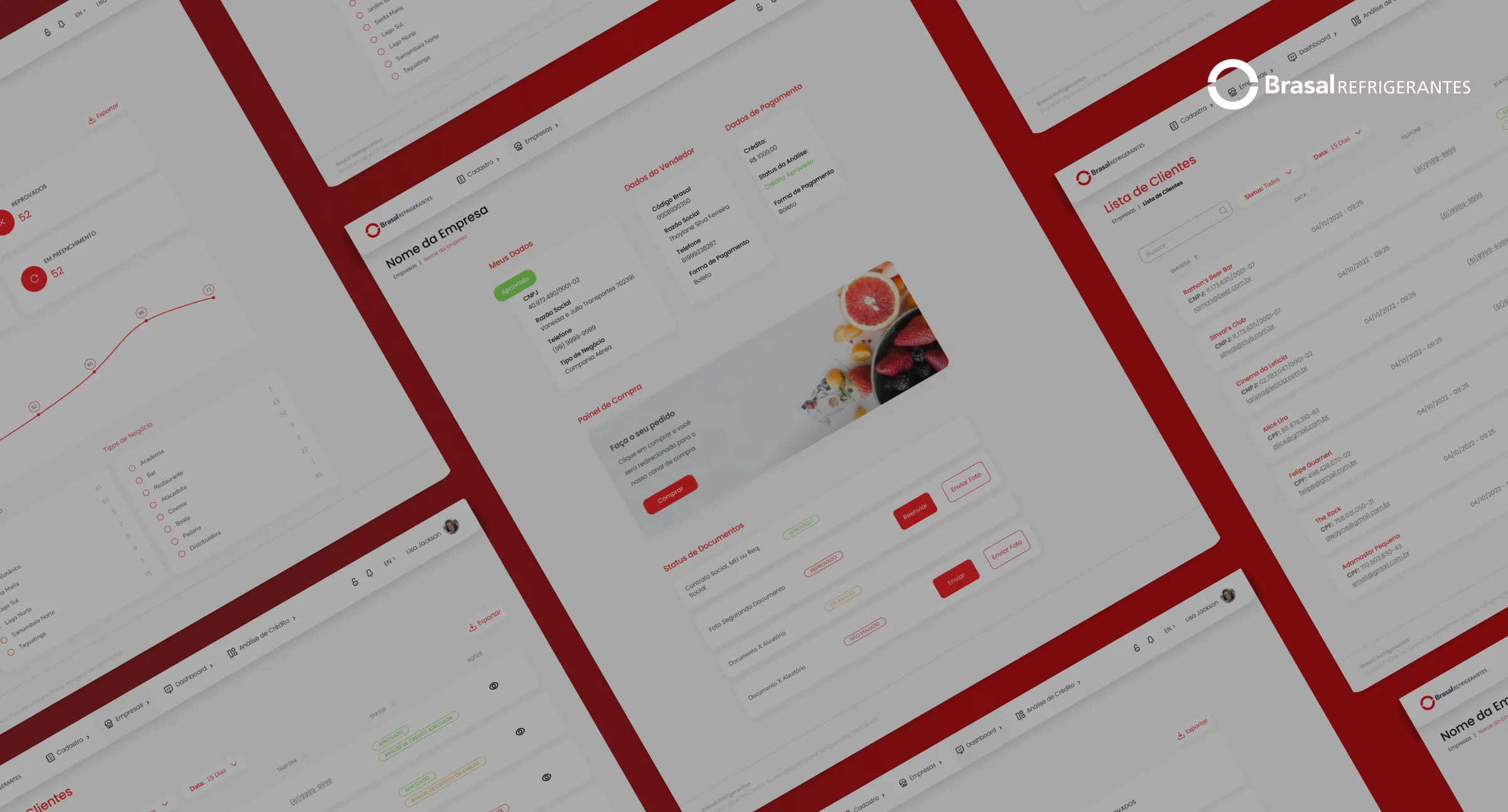
In short
- Problem
- Becoming a Coca-Cola retailer meant paperwork, spreadsheets and weeks of waiting, with no way to know where the application stood.
- What I did
- After 15 days of immersion inside Brasal, I designed one platform to submit documents, follow each application and manage registrations, for store owners, sales reps and coordinators.
- Outcome
- Registration left paper behind and became a single digital flow, with the same status visible to everyone.
Context
Before a bar, market or restaurant can sell Coca-Cola products in central Brazil, it has to register with Brasal. It’s the very first step of the business relationship.
That first step ran on paper and spreadsheets. Approvals could take weeks, and the internal team spent hours on the same administrative tasks over and over.
The problem
Store owners, sales reps and coordinators described the same frustration from different sides:
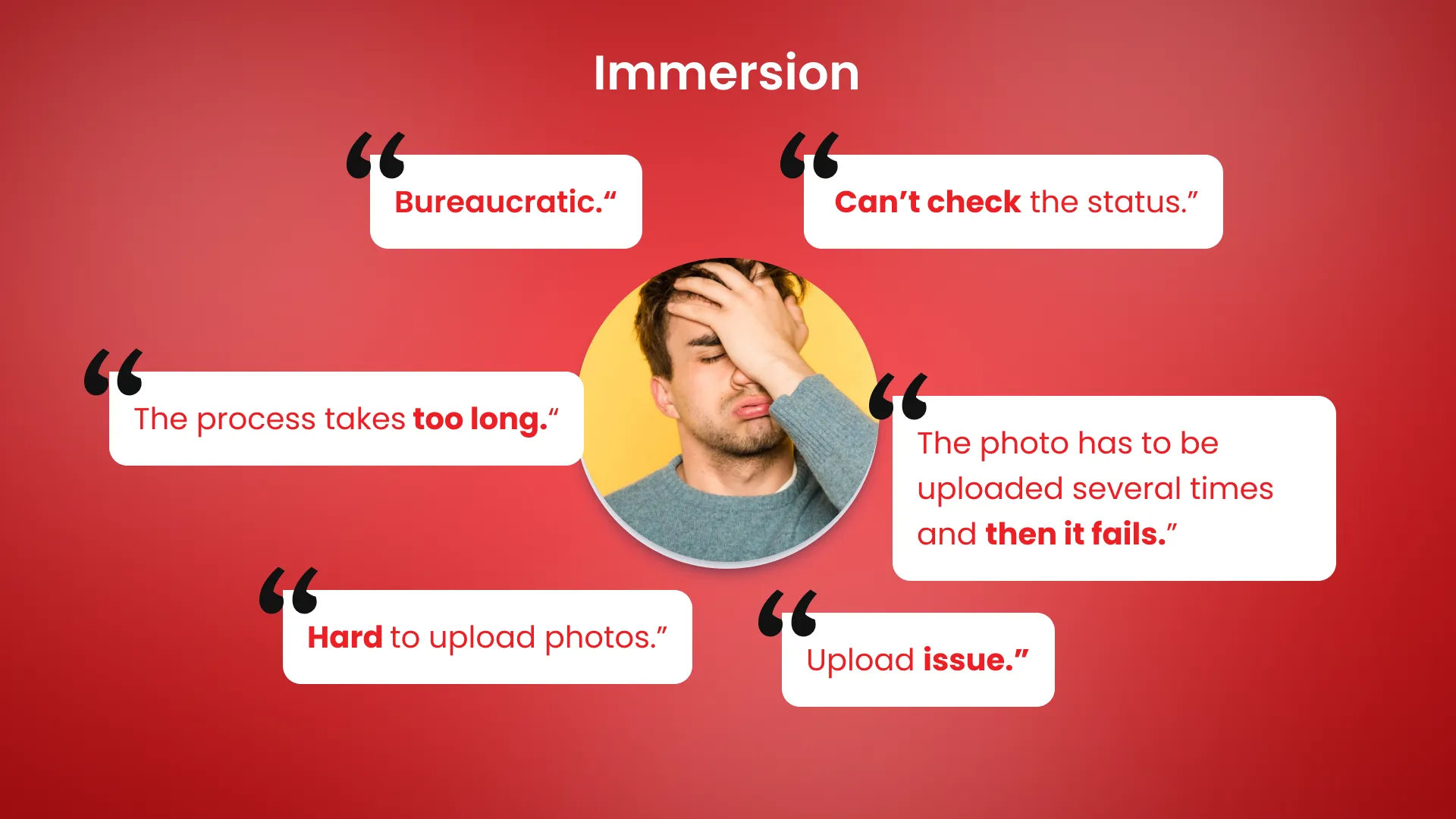
Nobody knew where an application stood. Photos and documents failed to upload and had to be sent again. And every “any news?” became a message or a phone call bouncing between the store, the sales rep and the back office.
My role
I was the UX/UI designer, end to end, working with the product owner, Leticia Miranda, and Brasal’s developers. I ran the immersion, facilitated the sessions with the business teams and designed the platform from the first flows to the prototype.
How we worked
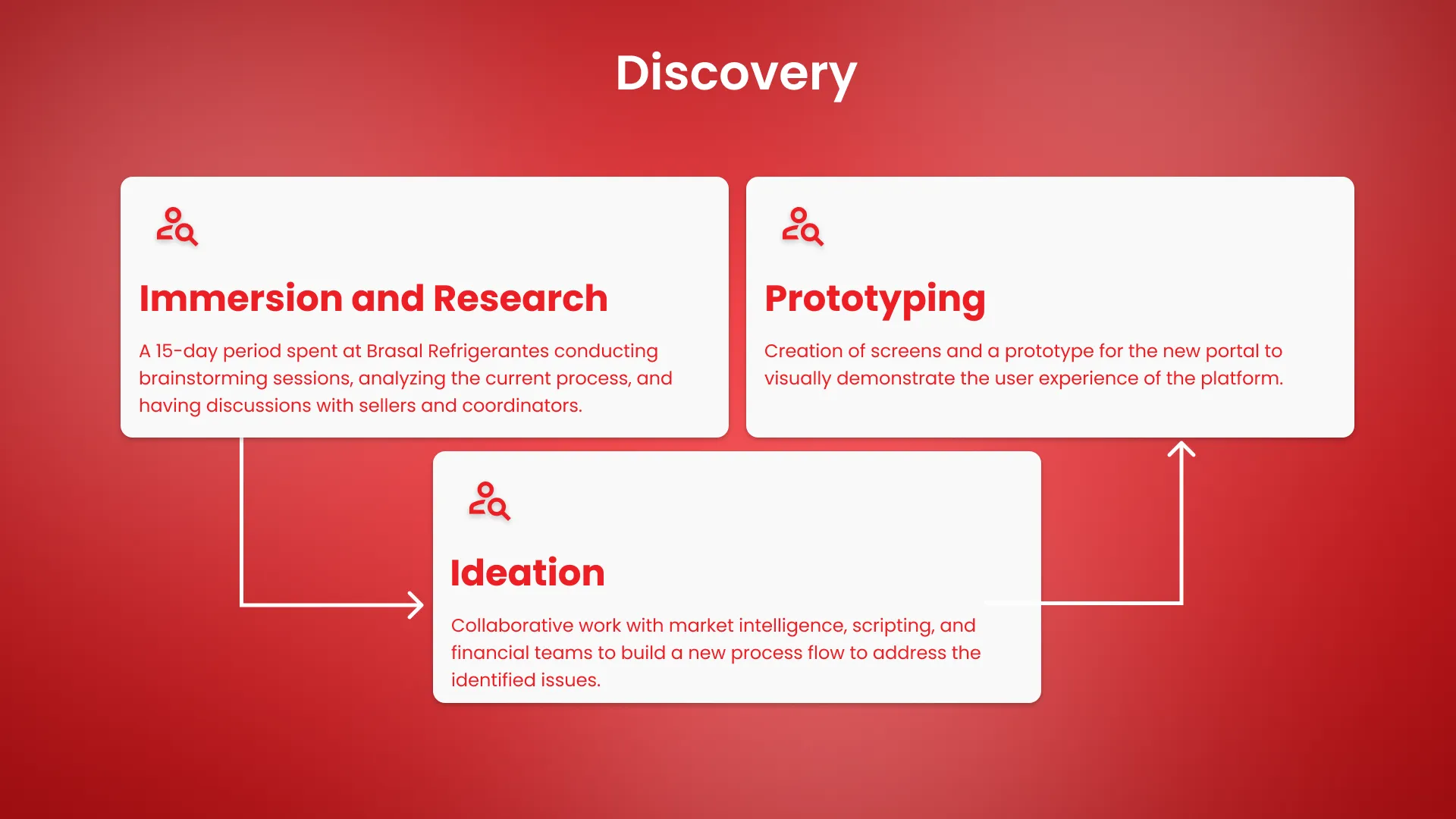
15 days inside Brasal. Brainstorming sessions, a close look at the existing process and long conversations with sellers and coordinators.
Ideation with the business. Market intelligence and finance joined in to redraw the process flow around the problems we had found.
Prototyping. Screens and a clickable prototype made the new experience concrete enough for everyone to react to.

Key decisions
One status, the same for everyone
“I can’t check the status” was the complaint we heard most. Each company got a page showing exactly which step its application is in, and the store owner and the sales rep look at the same information. Fewer calls, fewer messages asking for news.
Designed for the counter, not the office
Sales reps visit stores in person, often far from any office. The platform works on desktop, tablet and phone, so a registration can start right there at the counter, with the store owner beside them.
Coordinators see the whole pipeline
Individual applications weren’t enough for the people managing the team. A dashboard shows registrations and sales by salesperson, and a monitoring page lists every registration with its status, so bottlenecks show up before they turn into complaints.
The solution
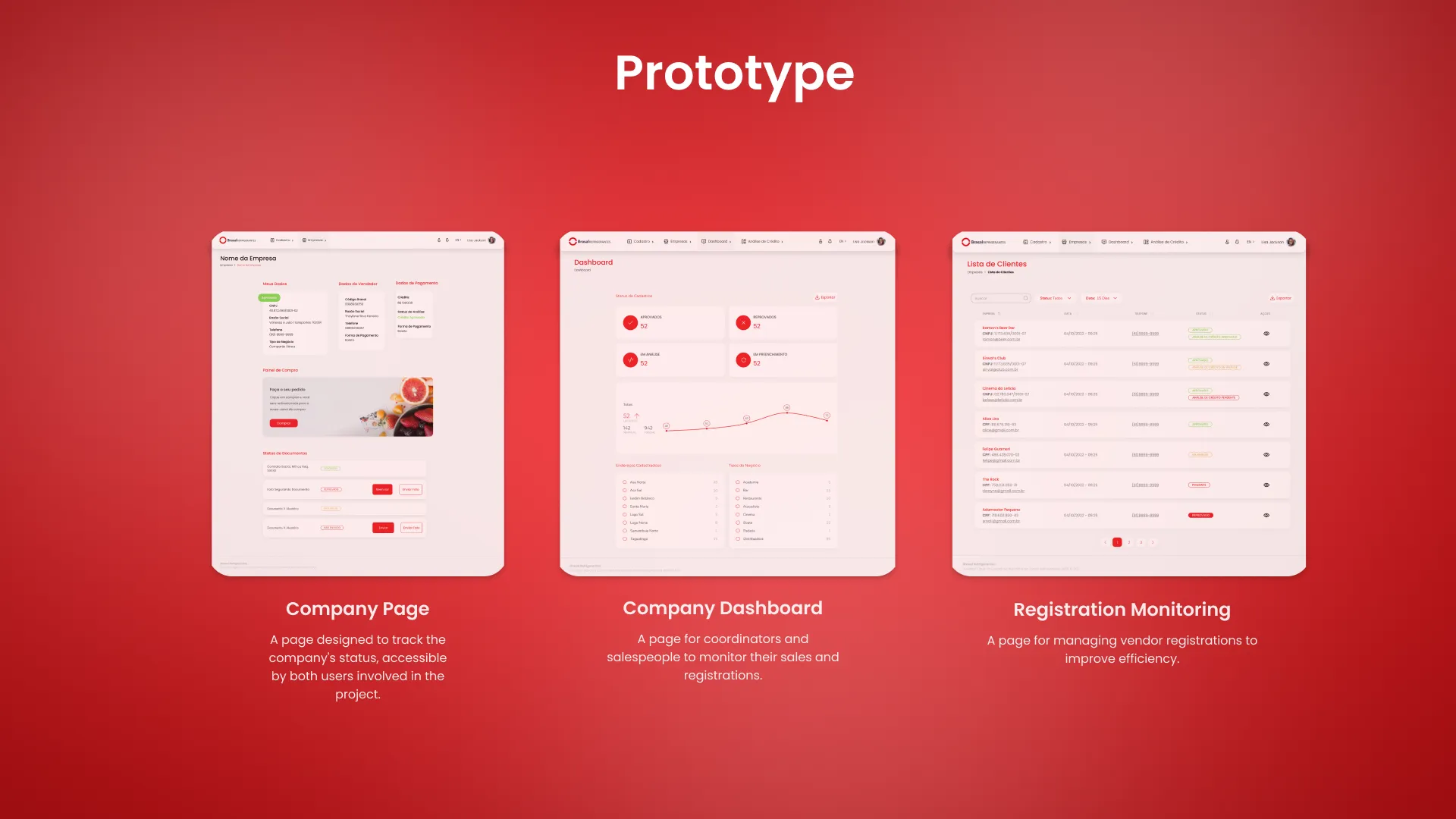
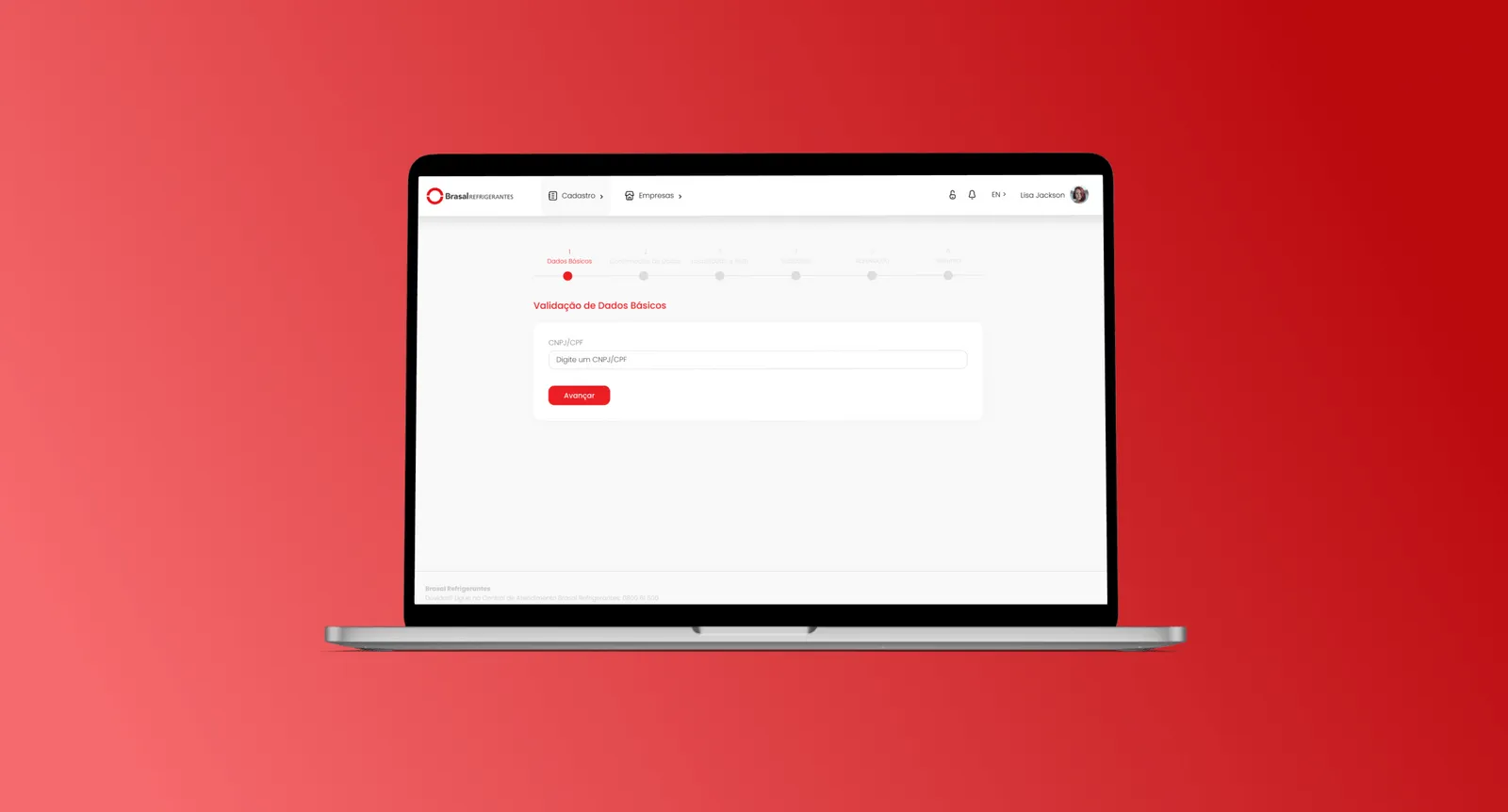
Documents, photos, company data and approval steps now live in one place. Sales reps, store owners and the back office work on the same record instead of passing papers from hand to hand.
Results
A process that depended on paper, spreadsheets and back-and-forth messages became one digital flow. Store owners follow their own application, sales reps register a store during the visit, and coordinators see every registration in one place. The internal team got back the hours that used to go into manual work.
How I’d measure it today
I’d follow three numbers: time from first contact to approval, how many applications come back because of missing or rejected documents, and how many status questions still reach the back office. Together, they show whether the process is really faster and clearer.